
Why Buy With Us?
When you shop with Fey, you’ll leave knowing you got a beautiful diamond at a really great price. With four generations of diamond-buying knowledge, relationships, and expertise under our belt, we make it easy for you to see and buy the very best diamonds available.
1. You will get an ethical, responsible and sustainably-sourced diamond.
2. We have very strict standards when it comes to diamond selection, which ensures that you don’t end up with a cloudy, milky or lackluster stone.
3. We always cut out the middle men to get you a better price on diamonds.

#1 Cut
Light Performance
The diamond cutter’s artistry makes the best use of light and maximizes the diamond’s inner beauty, strength and visual size. Fire and sparkle are maximized with great cut, but when poorly cut, precious light escapes through the bottom facets leaving the diamond dull and ordinary.
Visual Size and Brightness Difference
There are many choices the cutter will make that will maximize the beauty of rough diamond crystals but many more that will ruin the diamond’s beauty in an attempt to make the diamond weigh more. Comparing two diamonds with the same carat weight, the artistically cut diamond will have BOTH superior beauty and larger visual size than the standard cut diamond which was cut just to weigh more for advertising purposes.Complex? Technically yes. But, in person you will find it rather simple to see the differences for yourself.

#2 Color
Color is the natural body color visible in a diamond, ranging from colorless to yellow. The less color, the rarer and higher the price (except for natural fancy colors, like pink or intense yellow diamonds) Color is expressed in a single letter from D to Z. You should choose what you personally prefer. INSIDER TIPS – BEYOND THE 4CS

#3 Clarity
Clarity is an indication of a diamond’s purity. These “inclusions” are sometimes referred to as “birthmarks” because they are formed naturally and are unique to each diamond. Skilled diamond artisans (diamantaires) examine each rough stone to determine how to eliminate or reduce inclusions and flaws. The fewer, smaller, and less noticeable the inclusions, the more rare and higher the price of the diamond.

#4 Carat Weight
The weight of a diamond is expressed in carats divided further into smaller units commonly referred to as points. A point is equal to .01 carat. A one carat diamond is made up of 100 points. The higher the carat weight category, the more rare and the greater the per-carat value. “The size of a diamond” is not really the carat weight. The visual size is how big the diamond looks and is heavily determined by the artistry of the diamond cutter. A poorly cut 1.00ct diamond can be smaller looking (and not as bright and lively) than a magnificently cut .80ct diamond!
The Classic 4C’s, originally developed 100 years ago by DeBeers to simplify diamond quality for the inexperienced consumer are a great starting point. Unfortunately simplified, and common diamond buying advice based on them often misses the point. Here are some Insider Tips for choosing between standard diamonds and those with beauty that goes Beyond the 4C’s.

Beauty Begins with the Rough - Transparency
Virtually undocumented in the grading reports, the best rough diamonds have the finest transparency. Unless you have worked with rough diamonds or purchased diamonds from large parcels of hundreds of diamonds, you may not understand the differences. Experience like this keeps you from making a mistake with a diamond of lesser beauty.

Striving for Excellence in Cut
The Feys are constantly looking for excellence in cut which exceeds the simple evaluations listed on diamond reports and further contributes to the diamond’s transparency and exceptional beauty.
Strict evaluation of the diamond’s polish to assure that it was naturally polished with no burning or penetrations at all. Precision of the cut as to crown, pavilion, symmetry, strength and durability to assure maximum beauty and that the diamond is least vulnerable to abrasions, chipping and breakage. Exacting standards (again largely undocumented) for fancy shaped diamonds to ensure they are truly beautiful is also important.
More Fey Heritage - Almost 50 years ago, Ed Fey Jr. was one of the first ever to quantify (with the new emerging computer technology of the day) that there is no such thing as one perfect cut of a diamond. The incredible beauty of a diamond is a result of the combination of a multitude of factors all interplaying with one another in a subjectively magnificent brilliance. A true fusion of art, science and craftsmanship.

Hand Selected by the Fey Family
With over 50 years of international diamond buying experience and contacts with the largest and finest diamantaires in the world, we are constantly thankful for the quantity and quality of the diamonds we have to pick from. Just like shopping for produce at the best market in town, you always want to choose from a large selection of the best. Every diamond is hand selected by the Feys and then triple-checked by our team of trained gemologists. It’s a process called “high-grading”. When presented with 100 diamonds all of the same 4C’s and price, we will laboriously work through them and pick the one or two that are the most beautiful. If we were selling by the paper grade, we wouldn’t have to invest the time to do this. But we do. And you can see the difference.

Responsibly Sourced
Regarding diamonds we use and sell, we are proud to go far beyond the normal Kimberley Process industry standards. We believe that “not doing bad” is absolutely required, but not nearly enough. Importantly, the companies we buy our diamonds from are committed to a high standard of ethics designed to lift and support the communities where they do business.
As long-time partners with DeBeers Forevermark which have an independently audited supply chain from mine to your finger, we have access to the highest level of ethically sourced diamonds in the world. Along with Forevermark, we sell Code of Origin Diamonds, and the majority of our diamonds are from our DeBeers partner diamantaires who must abide by the strict DeBeers code of ethics for all of their business. In other words, when you buy a piece of jewelry from Fey & Co. you can be proud that you supported your local community as well as benefiting sustainability and community growth in the world at large.

Round Brilliant Diamonds
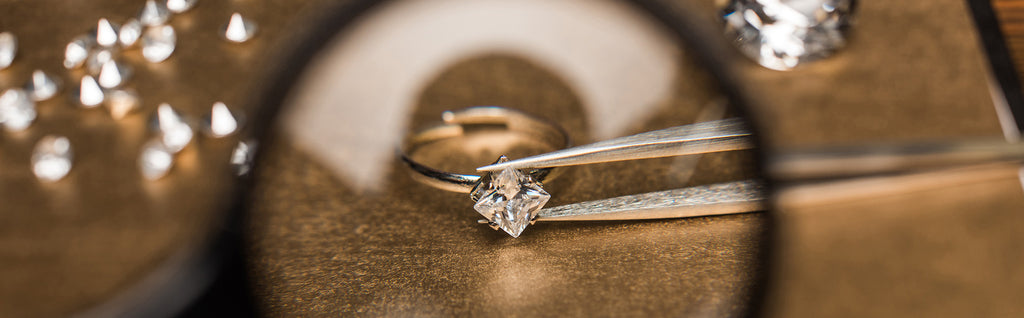
Of all diamond shapes, the most popular by far is the round diamond, which takes center stage in the classic engagement ring – a round, solitaire diamond set either in yellow gold or platinum. There are many different round brilliant diamond cuts, from Ideal Diamonds, with 58 facets, to modified cuts with special faceting arrangements and extra facets, like the Opus Masterwork Diamond.

Princess Diamonds
Princess cut diamonds are relatively new with a shape that is oblong, usually square or almost square, but with a modified brilliant cut arrangement of facets instead of a step cut. Most square or rectangular cuts just don't live up to the round brilliant for sparkle, but princess cut diamonds are designed for getting maximum brilliance from a square cut.

Marquise Diamonds
Marquise diamonds have an elongated shape with pointed ends supposedly inspired by the smile of the Marquise de Pompadour and commissioned by the Sun King, France's Louis XIV. It is often used as a solitaire or enhanced by smaller diamonds. Its long, ovate appearance lends a "big look" to a diamond engagement ring.

Cushion Diamonds
The cushion cut diamond is an antique style of cut. Sometimes referred to as a "pillow cut", the cushion cut has an open culet (the bottom of the diamond) and a rectangular to square shape with rounded corners. The beauty of a cushion cut is the depth of the diamond. In the past most quality cushion cut diamonds were found only on the antique and estate market, today cutters are once again cutting these stones.

Radiant Diamonds
Radiant cut diamonds have a square or rectangular cut that combines the elegance of the emerald cut diamond with the brilliance of the round. Radiant cut diamonds have 70 facets to maximize the effect of its color refraction. Radiants look great accented with baguettes or round side stones.

Emerald Diamonds
Emerald cut diamonds have a rectangular shape with cut corners. It is known as a "step cut" because its broad, flat planes resemble steps on a staircase. Inclusions and inferior color are more pronounced in emerald cut diamonds, so pay close attention to clarity and color grading.

Asscher Diamonds
Asscher cut diamonds were developed in 1902 by the Asscher Brothers of Holland. The Asscher cut is a stepped square cut, often called the "square emerald cut" and like an emerald cut, the Asscher cut has cropped corners. Asscher cut diamonds have gained in popularity recently.

Heart Diamonds
Heart shaped diamonds are basically a pear-shaped diamond with a cleft at the top. Heart shaped diamonds are sometimes considered romantic, but they can be difficult to cut. The skill of the cutter greatly determines the beauty of heart shaped diamonds.

Oval Diamonds
Created in the 1960's, the Oval Diamond is similar to a round except that it is elliptical in shape. The Oval Diamond usually has 56 facets. Oval diamonds give an even, perfectly symmetrical design popular among women with small hands or short fingers. Oval diamonds have an elongated shape which can make a woman's finger appear longer.

Pear Diamonds
The pear shaped cut often referred to as a teardrop shape is a combination of a round cut and a pointed marquise cut creating an elegant and unusual diamond. This shape is popular as a center in engagement rings, paired with another and offset in a ring and as a classic diamond drop pendant.
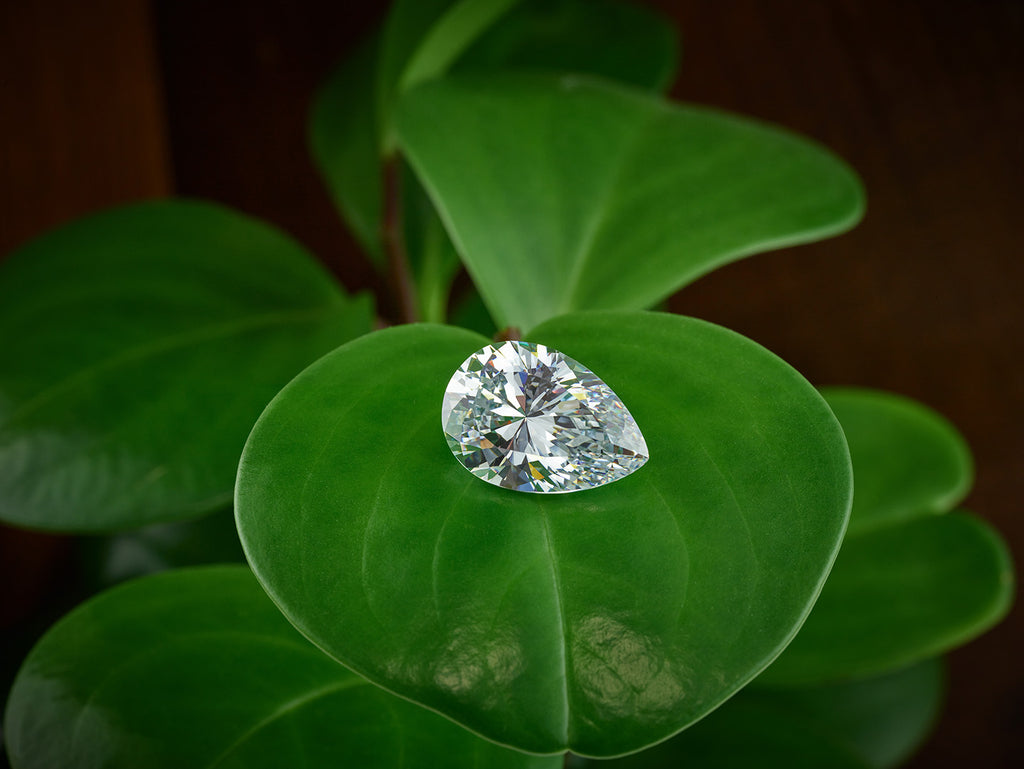
Fey & Co. is proud to offer a great selection of lab grown diamonds for you. Sure there are pros and cons to what type of diamond to buy and we carry the finest natural and lab grown diamonds for you. We prepared this unbiased review to help you with your choice.
Should I consider a lab grown diamond?
1. Are they the same?
Lab grown diamonds are chemically and structurally the same as natural diamonds. They have the same physical and optical properties that have made natural diamonds coveted for thousands of years. The main differentiation point is that as more lab grown diamonds are produced, they become less rare. While natural diamonds will always remain rare.
2. Can you tell them apart?
Yes, we can immediately test for lab grown diamonds in both our locations using specialized equipment. This equipment is relatively expensive, though the cost has come down recently. Similarly to the increase in accessibility of diamond simulant testers in the past few years, we expect this new equipment to be readily available across the entire industry soon.
3. Are they beautiful?
Many lab grown diamonds are very beautiful, but like any diamond, there are quality and craftsmanship differences, such as cutting and polishing, that can make one significantly prettier than another.
4. How are natural diamonds formed?
Diamond formation occurs in nature, deep in the earth, formed under extreme heat and pressure. Diamonds were brought to the earth’s surface by volcanic activity and have remained Mother Nature’s most beautiful gift ever since.
5. How are lab grown diamonds formed?
In a scientifically controlled environment, carbon is formed into diamond crystals under extreme heat and pressure, using immense amounts of energy, in a matter of weeks.
6. Are lab grown diamonds more earth friendly?
Though it would seem at first glance that lab grown diamonds would be more ecological than natural diamonds that are responsibly and ethically mined, there is significant debate due to studies revealing the amount of energy used while creating a lab grown diamond. One huge benefit of responsibly mined Forevermark and Code of Origin natural diamonds is their ecological mining practices along with the benefits provided to the local mining economies. For instance, the success and modernization of Botswana can largely be credited to the economic benefits reaped through the business of natural diamonds.
7. Are lab grown diamonds less expensive than natural diamonds?
Yes, definitely. The price gap is actually growing right now as the price of natural diamonds rises and lab grown diamonds falls. The price of lab grown diamonds has been dropping dramatically and consistently in the last couple of years as the technology has advanced.
8. What does this mean for natural diamonds?
A lot of people forget that lab grown sapphires, rubies and emeralds were created about 100 years ago! While lab grown gemstones did gain popularity initially, there is a much stronger demand for natural sapphires, rubies and emeralds which continued to grow in value over the years. Real is rare, especially in today’s world. And rare creations of nature are always highly coveted.
9. Does it matter where I buy diamonds?
Now more than ever it is very important to actually know and trust your jeweler. Are their natural diamonds the best in the world and properly identified and inscribed to help ensure their long-term value? Are their lab grown diamonds properly identified and marked as lab grown? Can they explain these critical differences and help you decide for yourself? These are questions all consumers should be thinking about and here at Fey & Co. we take pride in making sure our customers are fully educated and leave with the perfect diamond for THEM, because much like diamonds, every customer is unique and their jewelry should encapsulate that.
Give us a call, shoot us a message or check out the Diamond FAQs below. We’d be happy to tell you more about these beautiful little wonders. After all, it is our passion.
Is buying a diamond online sight unseen as good as buying in person?
While looking at diamonds on a website will help you get started on your diamond search, it may not be the ideal way to purchase your sparkler. The real beauty of a diamond is tangible and you can’t possibly see its true brilliance on a computer screen. When you shop and compare gemstones in person, as you would at Fey, you can evaluate which diamond you like best.
Is bigger always better?
Not necessarily. There is definitely a wow factor to a large diamond, but if it lacks quality it won’t be very impressive. Many factors determine how magnificent a diamond appears regardless of size. When combined, these characteristics set the cost of the diamond. Check out our diamond guide to learn about the 4C’s and how they can help you pick your perfect piece.
Should my diamond be certified by an industry recognized, independent grading lab?
Absolutely! An independent grading certificate from a top lab like Forevermark or GIA (Gemological Institute of America) will guarantee the quality of your gem. This will also ensure you get the proper grading for your diamond. Be aware of diamond certificates from labs you have never heard of. Sometimes they are really not independent laboratories.
If you cannot tell a diamond’s true beauty by the certificate, why do I need one?
A piece of paper cannot possibly describe the uniqueness of each diamond, but having a certificate will guarantee that you are getting a high quality product. At Fey & Co. we have diamonds graded by several different labs and additionally, by our in-store diamond experts. Plus, Ed and Tom take a look at everything themselves to ensure that you’re getting the best at Fey.
Is a diamond’s grading the best criteria for buying the most beautiful diamond for yourself or a loved one?
No. You (or the one you love) won’t be wearing a grading report from a gemological laboratory on your finger or neck. You’ll be wearing the diamond you purchase.
Considering a diamond’s grading is a very important step when buying diamonds and a clear indicator of the diamond’s quality and value. It is a critical part of the information you gather when choosing a diamond.
However, grading is best used as a guideline rather than a reason for making the final decision. Many times you’ll find a diamond that is actually more beautiful to your eye than another diamond that is graded somewhat higher. So, buy a diamond the way the experts do. Let your eyes be the ultimate judge, not the piece of paper that comes with it.
Is buying a diamond online (sight unseen) as good as buying in person?
No! There is a value in looking at diamond seller websites. They help you to understand the differences in prices, quality and diamond features. But there are also clear downsides to buying from one.
First, you cannot see the diamond’s beauty and brilliance on a computer screen. And you can’t compare the diamonds you are considering side-by-side. The real beauty of a diamond is tangible and when you compare one diamond with another, as you would at Fey, you can evaluate which diamond you like best.
Second, you can learn what other people suggest or like in diamonds, but you really cannot see and judge for yourself.
Third, since this is a relatively large, important and sometimes complicated purchase, you really will save time by making an appointment or dropping in to one of our stores and learning first hand for yourself about diamonds.
Lastly, you will meet and get to know a really great person at Fey & Co. who will be there to help you along every step of the way, including many years from now with service, warranty and diamond trade-up opportunities. You can judge for yourself whether this is the place you trust to make this important purchase.
When it comes to diamonds, is bigger always better?
No. Not most of the time. There is definitely a wow factor to a large diamond if, and only if, the quality of the diamond is good. The quality, value and beauty of a diamond are not totally dependent on its size, however. There are large diamonds with no life to them, because they originated from a lesser quality piece of rough. They may have visible inclusions, poor color, be cloudy, and not clear. Even more important, they may be poorly cut – cut being the most important of the 4 C’s – and therefore be lacking in brilliance and fire. So, carat weight is only significant if the diamond is beautiful and cut with great skill and artistry. Make sure no matter which of the diamond shapes you choose, it is well cut to proper proportions.
Should my diamonds be certified by an industry recognized, independent grading lab?
Yes! Simply put, do not buy a diamond without an independent grading certificate from one of the top labs such as Forevermark or GIA (Gemological Institute of America). Unfortunately, it is fairly common to see diamonds that are misgraded, especially when they are not graded independently. Be aware of diamond certificates from labs you have never heard of. Sometimes they are really not independent laboratories.
Since you cannot tell a diamond’s true beauty by the certificate, do you really need the certificate?
Yes. While it is true that you have to see the diamond yourself to judge the beauty, the independent grading will give you a good indication (usually within one grade, up or down) of the diamonds actual color and clarity along with accurate measurements of the diamond including its weight. You may find it hard to believe, but even the carat weight of the diamond can be exaggerated by the seller if you are not careful! And, the certificate can be very useful for future identification of the diamond, especially when combined with “laser inscriptions” Forevermark diamonds have a unique inscription in the heart of the diamond and can be registered for further security and trust.
Why do some jewelry stores recommend buying a diamond solely based on the grading certificate?
Probably because it “fits their business model.” Professional diamond buyers always look at the diamonds they are buying and choosing the ones best for them – even when the diamonds have already been certified. So why shouldn’t you buy the same way? The truth is that there is a big risk in not getting as good a diamond if you do not compare and choose for yourself. At Fey, our staff is trained on how to help you get the largest most beautiful diamond for your budget. Don’t you find it strange that these same companies offer diamonds for sale with the same “statistics” at vastly different prices? Maybe there is something that you are not being told!
Are diamond grades 100% accurate?
In general, we find that many color and clarity grades are “accurate” within one grade, up or down. Color and clarity grades are based on a subjective continuum. So, it is reasonable for different labs or even different graders within the same lab to reach different conclusions. Be aware that some diamonds are graded multiple times with the most favorable grades being presented to the buyer – a form of diamond “arbitrage”. Also, sellers who know their buyers are not likely to look at the diamond before it is purchased could certainly present the diamonds that have a better certificate grade, but are not nearly as pretty as you would expect.